70% Safe, 100% Anxious
The difference between feeling safe and actually being secure
The woman sitting across from me was clear about what she wanted.
“I don’t want risk,” she said. “I just want my money safe.”
She was 68 and had been retired for three years. Over the past six months, she moved more money into cash and short-term bonds, and less into stocks. Now, 70% of her portfolio was in “safe” investments.
On paper, it looked prudent, responsible, and careful. But when I asked how she was feeling about retirement, she paused.
“Honestly? More anxious than before.”
She couldn’t explain why. The volatility was gone. The red numbers on her statements had disappeared. Everything seemed stable. And yet the anxiety had gotten worse, not better.
After working with hundreds of retirees, I’ve learned that safety and security are not the same. Sometimes, focusing on safety can actually hurt your sense of security. In retirement, “safe money” often causes the anxiety it was supposed to prevent.
Let me start by acknowledging what most people mean when they say they want their money “safe.”
They mean no visible volatility, no red numbers on monthly statements, no sudden drops that make their stomach turn. They mean stability from month to month and more overall predictability in their portfolio.
Cash feels safe. Short-term bonds feel safe. Conservative portfolios with minimal stock exposure feel safe.
The absence of movement feels like protection.
And that instinct is completely rational. After decades of earning and saving, the fear of losing money is real. I’m not dismissing it. The anxiety about market crashes is legitimate, especially when you’re no longer earning a paycheck and can’t just “wait it out” like you could during your working years.
But here’s an important question: What if safety is only part of the answer?
What if protecting yourself from obvious losses doesn’t actually give you the security you want?
Let’s discuss three hidden costs of “safe” money that most people don’t see until years later.
Here’s a quick roadmap so you can track the argument as we go:
- Inflation: The silent leak that slowly erodes your purchasing power
- Interest-Rate Risk: How changing rates can undermine the stability of bonds
- Forced Withdrawals: The challenge of needing income when markets aren’t cooperating
Let’s look at each one in turn.
Inflation: The Silent Leak
Cash doesn’t go down in nominal terms. Your balance stays the same, maybe even grows slightly if it’s earning 2-3% interest.
But purchasing power erodes quietly.
Here’s the math: $500,000 sitting in cash or short-term bonds earning 2.5% while inflation runs at 3.5%. Over 20 years, your account balance might grow to about $820,000. But when you adjust for inflation, that $820,000 is only worth what $415,000 would buy you today. Imagine your weekly grocery trips suddenly filling just half the cart they used to. A travel budget that once got you two trips now barely pays for one. It feels like losing half your options, even though the numbers on paper keep going up.
You didn’t lose money on paper. But you lost buying power in reality.
And here’s what that feels like in retirement: you see a stable or even growing balance, but each year things feel a little tighter. Travel costs more. Healthcare premiums increase. Property taxes climb. The margin you thought you had keeps shrinking.
That tension turns into stress. It’s not because of market crashes, since those didn’t happen. It’s because your money slowly loses its ability to cover what you need.
Safety without growth creates long-term insecurity. You avoided losses, but you didn’t avoid decline.
Bonds: Stable Until They Aren’t
Bonds feel stable because they fluctuate less than stocks. The income is predictable. The principal seems safer.
But bonds come with their own set of dependencies that create anxiety in different ways.
When interest rates go up, bond values drop. What once felt like steady income can suddenly feel uncertain. If you need to sell before the bond matures, you have to accept the loss. If you hold on, your returns might not keep up with rising costs. When bonds mature, you might worry about what rates will be when you reinvest. A sudden jump in rates can turn calm into worry.
A retiree relying heavily on bond income starts to worry: Are yields enough? What happens if rates stay low? What if inflation spikes and my fixed income stops covering expenses?
Even without major losses, uncertainty creeps in.
They avoided the ups and downs of stocks, thinking it would free them from relying on the markets. But it didn’t. They still depend on interest rates, need inflation to stay low, and hope everything stays steady.
That’s not true security. It’s just a different form of dependency.
Conservative Portfolios: The Forced Withdrawal Problem
Here’s where behavioral finance reveals the real issue.
A retiree builds what feels like a responsible allocation: 40% stocks, 60% bonds. They plan to withdraw 4% annually. It seems prudent. Lower volatility than an aggressive portfolio. Less dramatic swings.
But then the market drops. Even conservative portfolios can fall by 15 to 20 percent, not as much as 30, but it’s still a loss. Withdrawals keep happening because bills and living expenses don’t stop. Selling investments during a downturn locks in losses that can’t recover.
So assets get sold. During the downturn. Locking in losses.
The retiree thinks, “Wait, I thought this was the safe allocation. I thought 60% bonds would protect me.”
The ups and downs were less than with a riskier portfolio, but the anxiety was still there. The real issue wasn’t how much things changed, but having to depend on selling investments at the wrong time.
If your income depends on selling assets—any assets, conservative or aggressive—you’re exposed to market timing. You’re hoping you don’t have to sell at the wrong time. You’re dependent on cooperation.
And that dependency creates anxiety, even in conservative portfolios.
Let me describe someone I see all the time.
They saved diligently for 40 years. They avoided speculative investments. They stayed diversified. They moved to a more conservative allocation as retirement approached. They did everything “right” according to conventional wisdom.
And yet: They check their account balances more frequently than they’d like to admit. They hesitate before booking trips. They underspend relative to what they can actually afford. They lie awake at night wondering if they’ll outlive their money.
Why?
Because their money is protected, but their income is not secured. Their portfolio may be stable. But their future still feels fragile.
I call this the emotional spiral of always playing it safe. You do everything to lower anxiety, like choosing conservative investments and avoiding big swings, but the worry doesn’t go away. It just feels different. You stop worrying about a market crash, but now you worry about inflation, outliving your money, whether your plan is right, and if this “safe” approach will really last.
Safety without structure creates low-grade anxiety that never quite goes away.
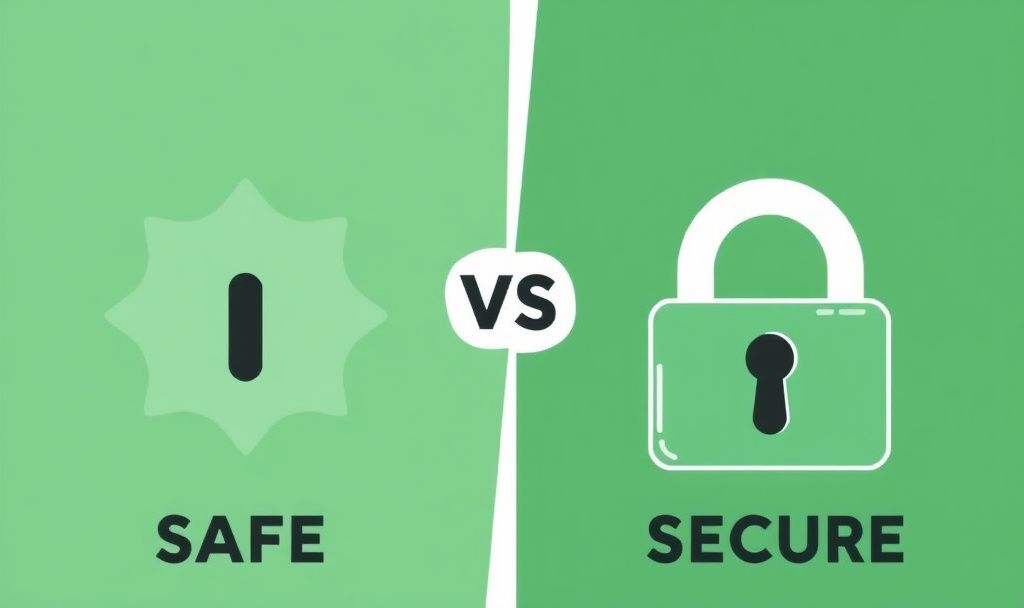
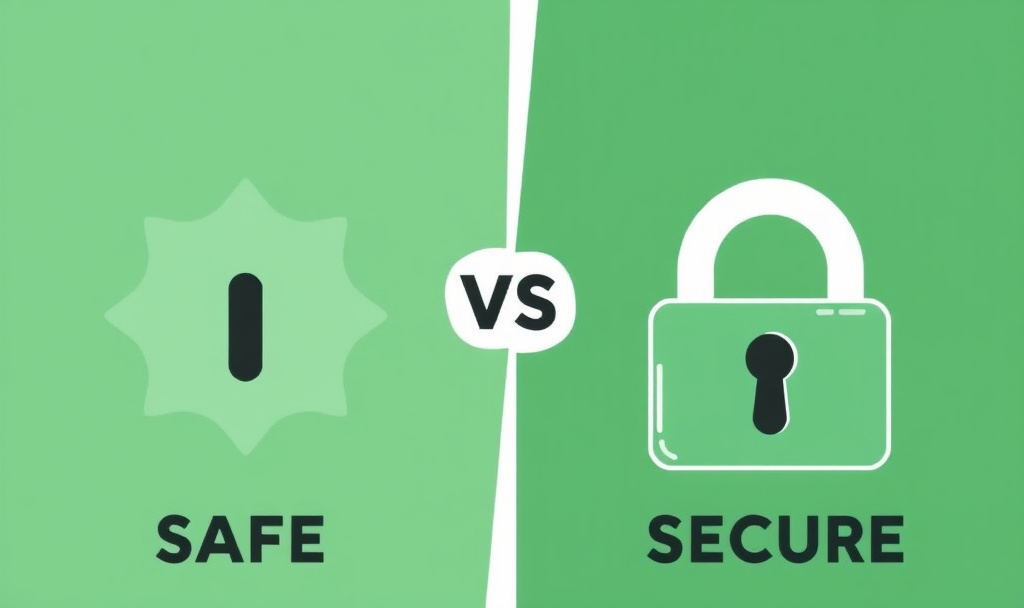
Here’s the core distinction that changes everything:
Safety = Protection from loss.
Security = Confidence that income will last.
These are not identical concepts. And confusing them is what creates the paradox.
You can have no volatility, no risk-taking, and a completely conservative allocation—and still feel insecure.
Security in retirement isn’t just about avoiding losses. It’s about knowing your income will keep coming in, no matter what happens in the markets.
That’s a completely different goal, and it needs a different approach.
Here’s why this matters from a behavioral perspective.
People tend to focus more on risks they can see and ignore the ones they can’t. That’s just how we think.
Visible risks are dramatic and immediate: market crashes, red numbers on statements, screaming headlines about downturns. These trigger our fear response. We feel them viscerally.
Invisible risks are gradual and abstract: inflation eating purchasing power over 20 years, longevity outlasting projections, tax bracket creep as RMDs grow, and withdrawal sequencing problems that compound quietly.
Cash and conservative portfolios solve visible risk. They eliminate the stomach-turning moments when you see your balance drop 15% in a month.
But they don’t help with hidden risks. In fact, they can make things worse. Low returns might not keep up with inflation, conservative portfolios might not last for 30 years, and “safe” investments can still force you to sell during bad markets.
And here’s the tough truth: over time, hidden risks cause more lasting anxiety than the obvious ones.
A market crash is shocking, but it passes. Realizing over the years that your money buys less and your “safe” portfolio might not last creates a constant, nagging worry.
That’s the paradox: what feels safest right now can actually make you feel less secure in the long run.
So what’s the alternative?
Give every dollar a job. That’s the real difference between feeling secure and actually being secure. When you decide what each dollar is for, whether income, growth, or liquidity, you add structure and clarity to your retirement plan. Safety isn’t bad, but it’s not enough without a clear purpose.
When people lump all their money into “safe”—when they treat every dollar the same way—they eliminate volatility, but they also eliminate structure.
And without structure, uncertainty returns. Just in a different form.
Security comes from having your money organized. Here’s an easy way to remember: Income, Growth, Buffer. Income dollars are set aside to give you steady cash flow for your basic needs. Growth dollars are for long-term investing, so you don’t have to touch them for yearly bills and they have time to grow. Buffer dollars are there for quick access in case of surprises, but they shouldn’t be your whole plan. Labeling your money like this makes things clearer and easier to manage.
Purpose reduces anxiety more than protection ever could.
When you know exactly what each part of your money is supposed to do, decisions become clear. Market drops don’t feel existential because you’re not depending on selling during the drop. Inflation becomes manageable because you’ve structured growth where it’s needed. Longevity becomes less threatening because income doesn’t depend on portfolio performance for 30 years.
Let me show you what this looks like in practice with a simple contrast.
Retiree A has moved 70% of their portfolio into cash and short-term bonds. They withdraw monthly from this “safe” bucket. But they worry constantly about inflation eroding their purchasing power. They watch interest rates, wondering whether they should do something different. They hesitate to spend on things they want because they’re not sure the money will last. Every financial decision feels uncertain.
Retiree B has structured their money by purpose. Essential expenses are covered by Social Security plus a predictable income source that doesn’t depend on market performance. Growth assets—stocks and longer-term investments—sit untouched, compounding for 10, 15, 20 years without forced withdrawals. A cash reserve handles unexpected expenses or opportunities. They know exactly which dollars do what.
Retiree B might see more volatility in their growth portfolio. Markets will still go up and down. But they experience less anxiety.
Because clarity beats conservatism.
When you know your basic income is covered no matter what the stock market does, market drops don’t feel like a big threat. If your growth investments can sit untouched for years, the ups and downs are easier to handle. When every dollar has a clear job, making decisions feels less like guessing.
If you feel anxious despite having “safe” investments, you’re not being irrational.
You’re sensing something real.
Your portfolio may be protected from visible losses. But your income may not be engineered for long-term security.
That distinction matters more than most people realize.
Retirement isn’t about removing risk entirely. That’s impossible. Markets will fluctuate. Inflation will happen. Life will throw surprises.
Retirement is about assigning purpose to each part of your money so that when those inevitable disruptions occur, your essential income doesn’t depend on everything going right.
Safety feels good right away. It takes away the stress of seeing your investments go up and down.
Security gives you peace of mind over time. It takes away the constant worry about whether your money will last.
And the goal of retirement isn’t comfort.
It’s confidence.
Which do you have right now: safety or security? Reply in the chat and tell me what makes you most anxious about your plan. I’d like to know what keeps people up at night.
-Phil